Learning Insights

Welcome to LibForKids: Empowering K-6 learners through tactile learning and evidence-based printables. Discover our curated educational library designed to foster critical thinking, fine motor skills, and lifelong literacy.

Welcome to LibForKids: Bridging the Gap Between Curiosity and Academic Excellence

In an era of rapid digital transformation, the essence of foundational learning often gets lost in the noise. At LibForKids, we believe that education is more than just curriculum—it is a cognitive journey that begins with a single spark of curiosity. Our mission is to provide a curated, high-quality sanctuary for parents and educators seeking […]

Welcome to LibForKids: Bridging the Gap Between Curiosity and Academic Excellence Read More »
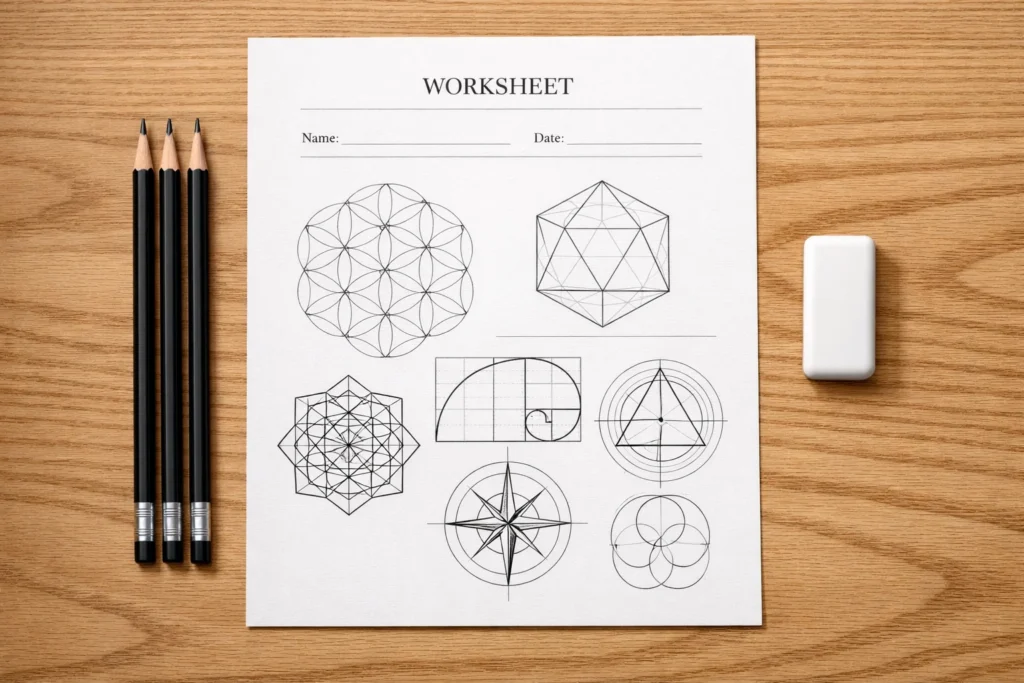
A student engaged in a STEAM-based activity, blending geometric logic puzzles with creative artistic expression to stimulate cross-lateral brain activity.

The Renaissance Learner: Blending Art and Logic for Future Innovation

The most brilliant minds in history never saw a boundary between art and science. Today, STEAM education (Science, Technology, Engineering, Art, and Math) is more critical than ever for developing the innovators of tomorrow. This concept of the “Renaissance Learner” highlights why activities that blend creative expression with logical reasoning are essential for 21st-century problem-solving.

The Renaissance Learner: Blending Art and Logic for Future Innovation Read More »

A focused 6th-grade student working on evidence-based writing and independent research worksheets, preparing for the transition to middle school success.

Bridging the Gap: Mastering the Transition to Middle School Success

The transition from elementary to middle school is a significant milestone that requires more than just academic knowledge; it requires robust executive function skills. Students must move from being “guided learners” to independent scholars. Preparing for this leap involves mastering independent research, algebraic logic, and evidence-based writing. Our 6th-grade curriculum support focuses heavily on higher-order

Bridging the Gap: Mastering the Transition to Middle School Success Read More »

A child engaged in a focused 15-minute daily study session with educational worksheets, representing the compound effect and consistency in supplemental learning.

The 15-Minute Compound Effect: Why Consistency Trumps Intensity in Education

The secret to academic success isn’t intensity; it’s consistency. The “Compound Effect” in education suggests that small, daily investments in learning yield exponential results over time. This is why a focused, 15-minute daily session with high-quality supplemental learning resources is often more effective than hours of sporadic study. Consistency builds neural plasticity, strengthening the synaptic

The 15-Minute Compound Effect: Why Consistency Trumps Intensity in Education Read More »

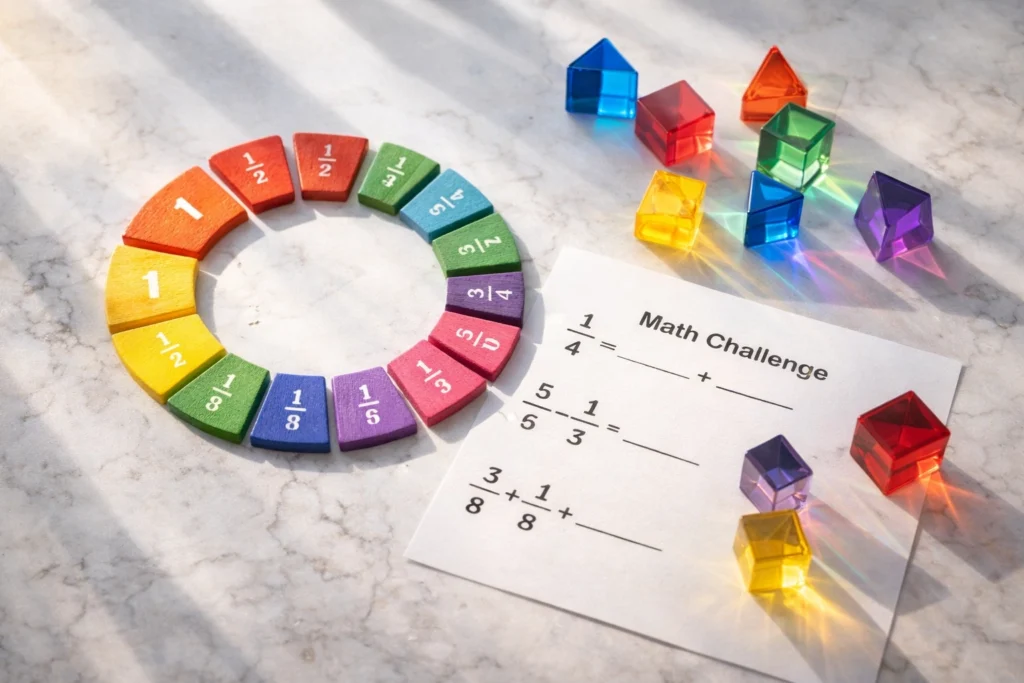
Educational math worksheets featuring visual learning models like number lines and geometric arrays to help students master fractions and multiplication through the CRA sequence.

Mathematical Mindsets: Transforming Abstract Logic into Visual Mastery

Mathematics is often viewed as a series of rigid formulas, but it is actually a language of patterns and logic. One of the most effective ways to teach this subject is through the “Concrete-Representational-Abstract” (CRA) sequence, a proven pedagogical method that transforms “scary” topics like fractions, decimals, and multiplication into digestible visual puzzles. For students

Mathematical Mindsets: Transforming Abstract Logic into Visual Mastery Read More »

A student practicing English Language Arts (ELA) skills with printed reading comprehension worksheets, demonstrating the science of reading from decoding to mastery.

The Architecture of Literacy: Building Fluent Readers from Pre-K to Mastery

Literacy is the foundation of all future learning, yet mastering it requires a meticulous “scaffolding” of skills. From Pre-K phonics to 6th-grade analytical reading, the journey to becoming a fluent reader is built on consistent exposure to high-quality text. Current research in the Science of Reading emphasizes that structured, paper-based literacy exercises are among the

The Architecture of Literacy: Building Fluent Readers from Pre-K to Mastery Read More »

Handwriting on a printable worksheet showing the haptic perception process, connecting brain and hand for enhanced fine motor skills and literacy retention.

Beyond the Screen: Rediscovering the Neurological Power of Tactile Learning

In an increasingly digital world, the fundamental “pencil-to-paper” connection is becoming a vital necessity for young scholars. While tablets and educational apps offer convenience, cognitive science reveals that the physical act of writing on paper activates unique neural pathways essential for long-term memory and linguistic development. This is why tactile learning remains a cornerstone of

Beyond the Screen: Rediscovering the Neurological Power of Tactile Learning Read More »